Greg Maddux: Pitching Painter
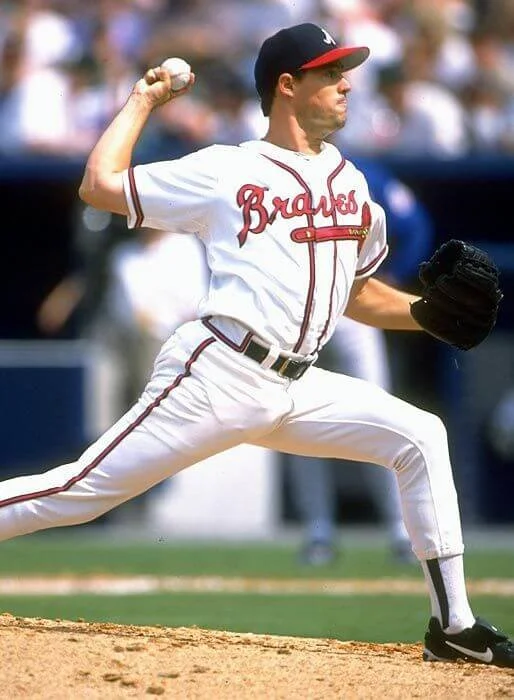
Image credits: CNN
In 1985 Greg Maddux was a 19-year-old pitcher for the Chicago Cubs' farm team at Peoria in the Class A Midwest League. At 5-10 and 150 pounds, he was the smallest pitcher on the team and far from the hardest thrower.
Before a game he was loose and fun-loving. But on the mound he was tough and aggressive; he “owned home plate” and didn't hesitate to pitch inside and send a batter sprawling in the dirt. One night he witnessed what that could lead to.
Quad Cities was in town. A Peoria pitcher hit a batter with a fastball. The bruised batter yelled something at the pitcher while trotting to first base. The jawing continued in the next inning until the visitors stormed out of the dugout and the battle was on.
Quad Cities outfielder Jeff Manto recalled, “Unlike most baseball fights, this one was real and it was ugly. They were kicking with their spikes and punches were thrown.”
It took more than thirty minutes to break it up. But it was not over. “One of our guys was thrown out of the game. He had to pass the Peoria bullpen to get to the clubhouse. He said something to them and they jumped him and it started all over again in left field.”
It took another half hour to restore order again. Maddux watched the brawl from the dugout. It was the biggest baseball fight he ever saw, but it did not deter him. He kept the brushback pitch in his game plan. Ten years later he started Game 5 of the World Series for the Atlanta Braves against Orel Hershiser and the Cleveland Indians.
In the first inning Indians slugger Albert Belle hit a home run with a man on second. The next batter was Eddie Murray, Maddux zipped a fastball under his chin. Murray spun out of the way, then took a few steps toward the mound and yelled something at Maddux.
Players swarmed out of both dugouts and bullpens, but nothing except words were thrown before umpires broke it up. Maddux went on to win, 3-2, allowing one more hit and no walks.
Greg Maddux: Pitching Painter
Greg Maddux was born in 1966, the middle child between a boy and a girl in a military family that moved several times with their father, an Army finance officer. All three siblings were athletes in high school.
Wherever they lived, Greg and his older brother Mike, who grew to 6-foot-2 and 185 pounds, made up their own games. Mike always won, but Greg always refused to lose, insisting on prolonging the finish. They were in high school when the family finally settled in Las Vegas.
After graduating, Mike was drafted by the Phillies and began a long career as a pitcher and pitching coach. Greg pitched for the high school team, too, but scouts ignored him; he was too small, they said, to be a major league prospect.
But one Cubs scout saw something in the kid who wore a T-shirt beneath his uniform with a message: “If I can't win, I don't want to play.”
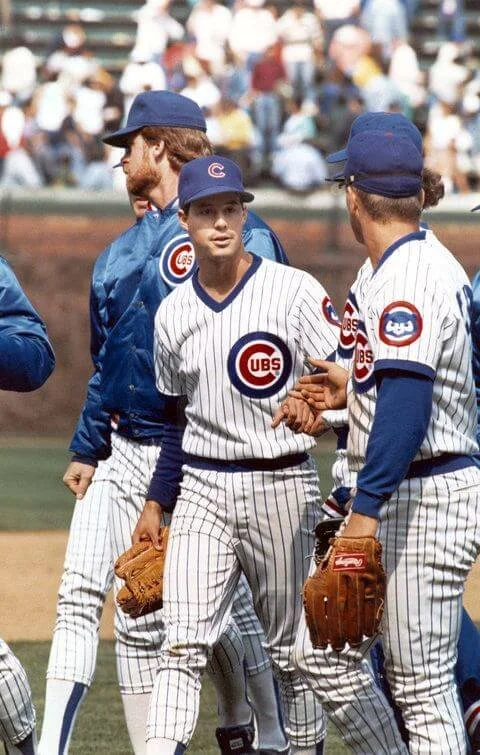
Maddux started at the bottom and worked his way up. Image credits: Chicago Tribune
He started in the lowest minor league in a small town, Pikeville, Kentucky. They played on a high school diamond before “crowds” of maybe 150 in a tiny grandstand.
The clubhouse was the school locker room. There was little to do during the day but play cards. Bus rides were long. None of it bothered him. He was there to learn and improve. He won 6 and lost 2.
Promoted to Peoria in the Midwest League, he was the smallest pitcher on the team, still weighed only 150, and was far from the hardest thrower. But he was already developing his pitching philosophy:
“A fastball that moves, knowing where you want to throw it, and throwing it there are the basics. Location is the key. A pitcher doesn't have to throw 100 miles an hour to be a winning pitcher. Eighty is fast and 85 is plenty fast enough. If you can locate your fastball and change speeds you can pitch.”
He learned to throw five different pitches at different speeds to specific locations. He studied hitters until he could sense what they were looking, when they would swing and when they would not.
Peoria Manager Pete Mackanin
“He was cool with an inner confidence, something you can't teach. Either a person has it or they don't.”
Like an artist who puts a dab of color right where he wants it on the canvas, Maddux put his 85-mph fastball right where he wanted it in the strike zone, and if it wiggled or dipped a little when it got there, so much the better.
When he wanted to paint the edges he usually got a strike call from umpires because of his reputation for accuracy, while a pitcher who was all over the place might not get the same call.
After a 10-1 season at AAA Iowa, Maddux was called up to the Cubs. But he wasn't ready. What had worked against minor league hitters didn't work in the big leagues. He was 6-14 in '87.
Cubs pitching coach Dick Pole decided he needed another pitch. He took Greg to the Venezuelan winter league and taught him to throw a change-up and a slow curve. That made all the difference. Greg was 18-8 in '88 and went on to the Hall of Fame with a 355-227 record and 3.16 ERA'.
What did players and managers credit for his success? Supreme confidence, hard work and brains for starters. He drove himself relentlessly. When he made a mistake, he would stand on the mound facing the outfield, put his glove up to his mouth and yell at himself. Then it was over and he would turn and face the next batter, as calm and composed as before.
Greg Maddux resembled Christy Mathewson more than any other modern pitcher. Their approach to pitching was the same: make the batter hit the ball you want him to hit.
There's a story about Matty that, true or not, is illustrative of Maddux as well. One day a young player got three hits off him and boasted, “So that's the great Mathewson.”
An older player asked him, “Do you know what kind of pitches they were that you hit?”
“No,” said the youngster, “Who cares?”
“Matty does,” said the veteran, “and you can bet you'll never get any of those pitches again.”
Like Matty, Greg Maddux seemed to have a book in his head on every batter in the league. By 1989, when he was only 23, Cubs pitchers and catchers were looking to him for advice on how to work hitters early and late in a game. Joe Girardi was a rookie catcher.
Joe Girardi
“In situations where I was catching and the count was 2 and 2 or 3 and 2 and the batter had fouled off a few pitches and I didn't know exactly how to get the him out, I'd look over to Greg in the dugout and he'd give me a sign what to throw.”
